Cuttings

Stuff I’ve shared on the socials. Some of it’s my shitposting, some of it’s good posts from other people that have caught my eye.

Subscribe to Cuttings
Posted on LinkedIn

๐Ÿ”ฅ Hot off the press from my ๐—”๐—ด๐—ฒ๐—ป๐˜๐—ถ๐—ฐ ๐—ฆ๐—ผ๐—ณ๐˜๐˜„๐—ฎ๐—ฟ๐—ฒ ๐—™๐—ฎ๐—ฐ๐˜๐—ผ๐—ฟ๐˜†!!

๐Ÿ”ฅ Hot off the press from my ๐—”๐—ด๐—ฒ๐—ป๐˜๐—ถ๐—ฐ ๐—ฆ๐—ผ๐—ณ๐˜๐˜„๐—ฎ๐—ฟ๐—ฒ ๐—™๐—ฎ๐—ฐ๐˜๐—ผ๐—ฟ๐˜†!! โš™๏ธโš™๏ธ ๐Ÿ’ก #Inspired by Kafka, ๐—ž๐—ฎ๐—ณ๐˜‚๐—ฐ๐—ธ is a ๐™—๐™ง๐™ค๐™ ๐™š๐™ง ๐™›๐™ค๐™ง ๐™ฉ๐™๐™š ๐˜ผ๐™„ ๐™–๐™œ๐™š.

โšก As you’d expect with any modern Kafka, it’s diskless. In fact, it’s ๐˜ค๐˜ฐ๐˜ฎ๐˜ฑ๐˜ญ๐˜ฆ๐˜ต๐˜ฆ๐˜ญ๐˜บ diskless. ๐Ÿ“Š In benchmarks (which I’ve shared too, you can check the numbers) it’s ๐—ข๐—ฉ๐—˜๐—ฅ ๐Ÿฎ๐Ÿฌ,๐Ÿฌ๐Ÿฌ๐Ÿฌ ๐˜๐—ถ๐—บ๐—ฒ๐˜€ ๐—ณ๐—ฎ๐˜€๐˜๐—ฒ๐—ฟ than Kafka! ๐˜ž๐˜ฉ๐˜ช๐˜ค๐˜ฉ ๐˜ช๐˜ด, ๐˜ฑ๐˜ณ๐˜ฆ๐˜ต๐˜ต๐˜บ ๐˜ง๐˜ข๐˜ด๐˜ต.

๐Ÿš€ #Proud and #Humbled to announce that Kafuck is now ๐—ณ๐˜‚๐—น๐—น๐˜† ๐—ผ๐—ฝ๐—ฒ๐—ป ๐˜€๐—ผ๐˜‚๐—ฟ๐—ฐ๐—ฒ. โญ Try it out, ๐˜€๐˜๐—ฎ๐—ฟ ๐˜๐—ต๐—ฒ ๐—ฟ๐—ฒ๐—ฝ๐—ผ, and let me know what you think

๐Ÿ”— https://github.com/rmoff/kafuck/

#kafka #opensource #diskless #blazinglyfast #firstprinciples #buildinpublic #ai #hashtag #makenomistakes

Posted on Bluesky

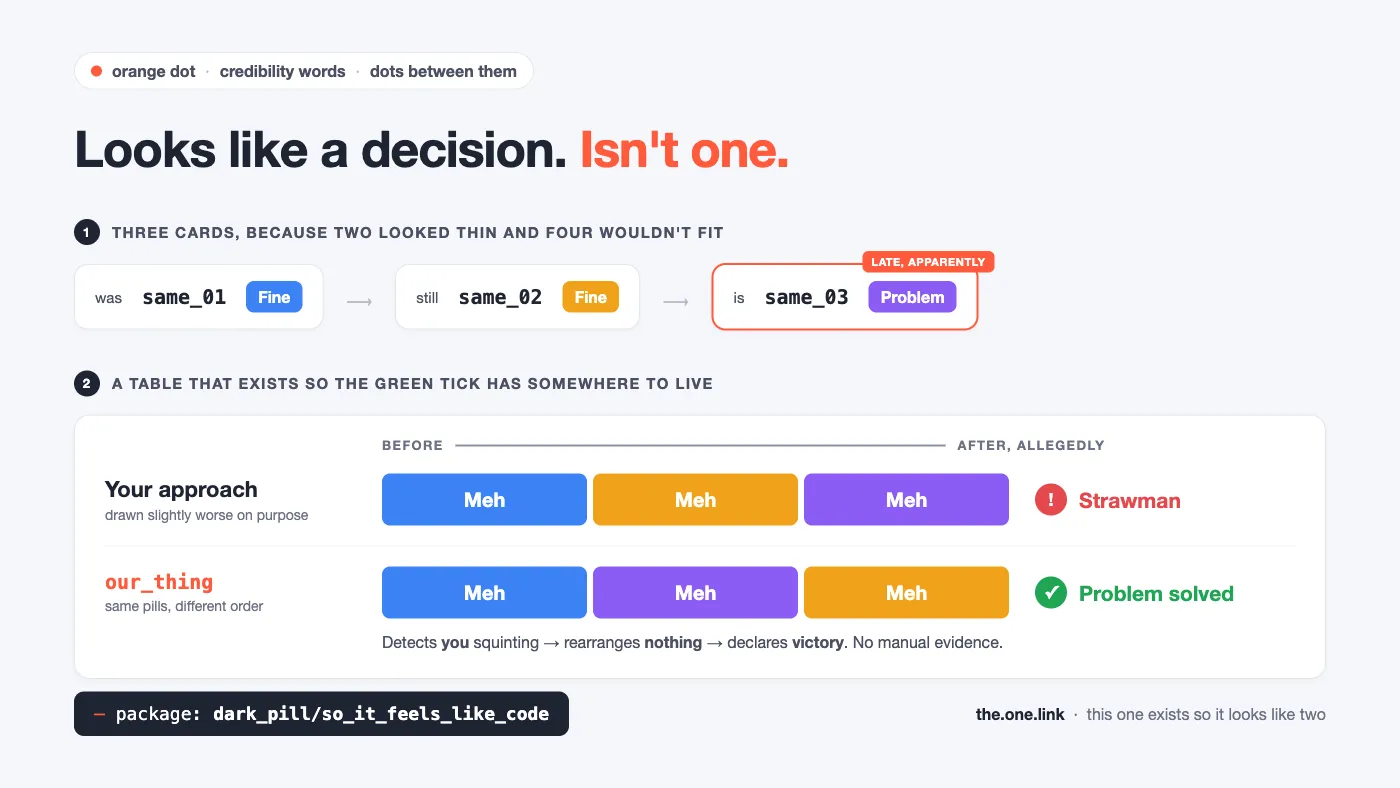
Every slide deck and blog post everywhere this month, brought to you by Claude

Parody of an AI-generated slide where every element describes its own design clichรฉ. Headline: โ€œLooks like a decision. Isnโ€™t one.โ€

Linus Torvalds with some wise words, in his own inimitable style :D

Linus Torvalds on AI use in coding

lore.kernel.org

I don’t understand this whole idiotic concept of “don’t use AI for X”.

Here’s a new rule just for you: don’t use compilers for any of your kernel submissions.

Because if you can’t show that you really understand what the machine is actually doing by writing your code in assembler, then I don’t want to see your code contribution. You clearly aren’t competent if you can’t write it that way.

Practitioner Voice

Jim Highsmith ยท martinfowler.com

Academic writing hides behind rigor. Thought leadership hides behind polish. Now a third option has arrived โ€” LLM Voice โ€” that doesn’t require hiding at all, because there’s no one there.

Practitioner authority comes from having been in the situation, not as a researcher studying it, but as a person responsible for the outcome.

Pluralistic: Itch scratching

Cory Doctorow ยท pluralistic.net

I think that so much of the outrage about slop code โ€“ floods of garbagey pull requests and bug reports โ€“ is the result of the collapse of this dynamic. Slop’s not merely annoying or time-wasting: it’s a betrayal of the love and care that goes into writing and maintaining code for others.

The Five Camps of Data Modeling (and Which One Youโ€™re Stuck In)

Joe Reis ยท practicaldatamodeling.substack.com

Practitioners rarely look beyond their niche. Data engineers whoโ€™ve never designed a normalized table. App devs whoโ€™ve never heard of slowly changing dimensions. ML engineers whoโ€™ve never modeled a core business domain. Ontologists whoโ€™ve never shipped a production pipeline.

From Data Contracts to Quality Checks

Chris Gambill ยท gambilldataengineering.substack.com

A data contract only earns its keep when its computable requirements become enforceable checks.

Scattering assertions throughout notebooks does not solve that problem. Neither does documenting requirements in a wiki that has no connection to runtime behavior.

Agents: The new, New Kingmakers

Stephen O'Grady ยท redmonk.com

Successful Developer Relations campaigns were about persuading and negotiating with large developer populations. Agent relations, however, will require influencing a small number of models, one that can likely be counted on two hands.

Brittany Ellich absolutely nails it in this excellent article: “But here’s the thing: no one actually knows what the future is going to be.”

Embrace the uncertainty

brittanyellich.com

I enjoyed this Hard Fork interview; very accessible for a layperson like me :)

> Amanda Askell, Anthropicโ€™s in-house philosopher in charge of shaping Claudeโ€™s personality, discusses the companyโ€™s newly released โ€œClaude Constitutionโ€

I put together a quick list of TUIs for #ApacheKafka. Any others to add to this list? Which ones are people using?

List of Kafka TUIs

old.reddit.com

What one conference talk do you keep coming back to, again and again, over the years?

I’ll start: @Gwen (Chen) Shapira’s “Streaming Microservices: Contracts & Compatibility” talk from QCon 2017:

(Related to this, a tweet from Gwen a year later but it still makes me chuckle: “Don’t make me go out there and unfuck your data pipelines for you.” https://x.com/gwenshap/status/967118574014799872)

A step-by-step guide to building a key-value database from scratch: - love the explainer/interactive animation in this

Build Your Own Database

Nanda Syahrasyad ยท nan.fyi

Good post from Sam Harris about public speaking, including some good lessons for conference speakers specifically

The Silent Crowd

Sam Harris ยท samharris.substack.com

Have you ever found yourself thinkingโ€ฆFlink Watermarksโ€ฆWTF? ๐Ÿ”ฅ This new tool might be for you :)

It’s a hands-on, scrollytelling walkthrough of what watermarks in #ApacheFlink are, why they matter, and how to use them.

Try it out

Flink Watermarksโ€ฆWTF?

flink-watermarks.wtf

I really enjoyed this talk from Paul Iusztin at QCon London. Covers lots of concepts around like LLMs, RAG, and Agents and explains them well.

The Data Backbone of LLM Systems

Paul Iusztin ยท infoq.com

Now I wish I’d watched this before I tried figuring it out for myself ๐Ÿ˜… Tim Berglund nails it in this crystal-clear explanation of MCP